Blog Article
Journey Through Time: Classical Maldivian Paper Currency (1983-2000)
Explore the rich legacy of classical Maldivian paper money from 1983-2000. Discover the artistry, historical significance, and how to find genuine vintage Maldivian banknotes for your collection. Perfect for numismatists and history enthusiasts.
Journey Through Time: Classical Maldivian Paper Currency (1983-2000)
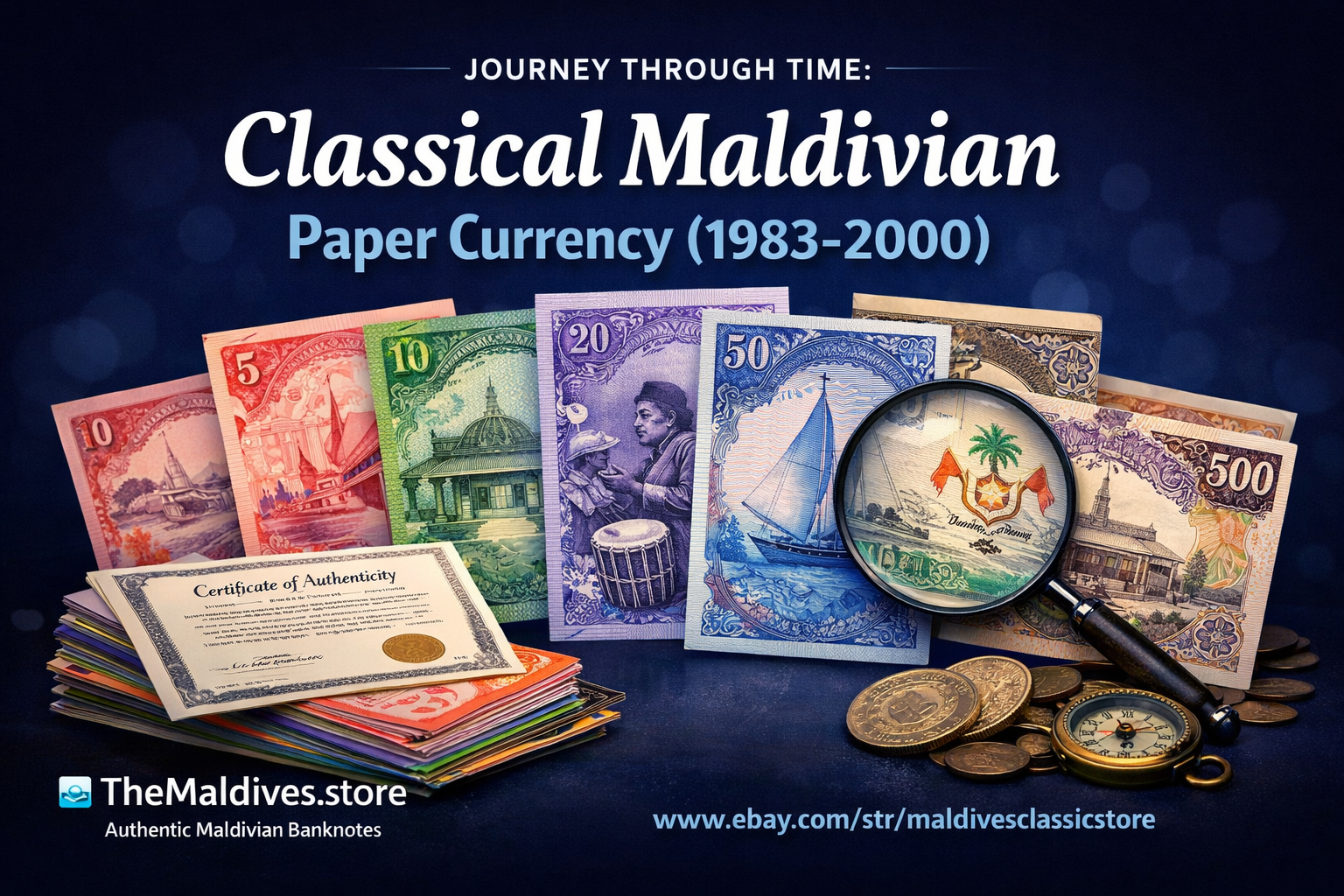
For numismatists and history enthusiasts alike, collecting classical Maldivian paper money offers a unique window into the rich cultural tapestry and economic evolution of this island nation. The period between 1983 and 2000 represents a pivotal era in the monetary history of the Maldives, characterized by a series of beautifully designed paper banknotes that capture the essence of Maldivian life, heritage, and progress. These vintage Maldivian banknotes are not merely old currency; they are miniature works of art, each telling a story of a vibrant past.
At TheMaldives.store, we understand the allure of these historical MVR notes. Our mission is to provide access to authentic, uncirculated examples of this bygone era, ensuring that collectors can preserve a tangible piece of Maldivian heritage. This comprehensive guide will take you on a journey through the legacy of these remarkable paper notes, exploring their artistic merits, historical context, and providing essential advice for anyone looking to acquire Maldives currency for sale and build a meaningful collection. Get ready to delve into the intricate details that make classical Maldivian paper currency truly special.
Unveiling the Legacy of Maldivian Paper Currency
The Maldivian Rufiyaa (MVR) has a fascinating history, and the paper banknotes issued between 1983 and 2000 hold a significant place within it. This series marked a period of stability and development for the archipelago, reflected directly in the currency's design and features. Unlike the modern, durable polymer notes, these paper banknotes carry a distinctive tactile quality and a traditional aesthetic that resonates with collectors who appreciate the historical feel of currency. They represent a bridge between older, less formalized currency issues and the highly advanced polymer "Ran Dhiha Faheh" series introduced later.
The designs on these notes moved beyond simple denominations, becoming canvases for depicting the Maldivian way of life, its economic drivers, and its aspirations. From traditional dhoanis (Maldivian fishing boats) to important national landmarks, each element was carefully chosen to reflect national identity. Understanding the context behind these notes enriches the collecting experience, transforming a simple acquisition into a genuine connection with Maldivian heritage.
The Dawn of a New Era: Monetary Reforms
The 1983 series was a direct result of ongoing efforts by the Maldives Monetary Authority (MMA) to modernize the nation's financial system and consolidate its currency. Prior to this, various forms of currency, including cowrie shells and different types of coinage, had been in circulation. The introduction of a standardized series of paper banknotes with consistent design elements and security features was a crucial step in establishing a robust and recognizable national currency. This era set the stage for future monetary advancements, even as these paper notes were eventually phased out.
Cultural Narratives on Paper: Themes and Motifs
The themes adorning these classical Maldivian paper currency notes are a vibrant celebration of the islands' unique culture and environment. The Maldivian economy has historically revolved around the sea, with fishing and trade playing paramount roles. Consequently, dhoanis, fishing activities, and marine life are recurring motifs. These designs also subtly showcased the emerging tourism industry, which would eventually become the backbone of the Maldivian economy. Through these intricately designed notes, one can trace the story of a nation evolving while holding steadfast to its traditions and natural beauty. For an in-depth look at how these elements are portrayed, explore our article on The Artistry & Heritage of Classical Maldivian Paper Banknotes.
The Artistry and Historical Significance of Each Note
Each denomination within the 1983-2000 series of vintage Maldivian banknotes is a testament to the nation's artistic prowess and historical narrative. Unlike the uniformity sometimes seen in modern currency, these notes offered a diverse visual journey. Collectors often find joy in appreciating the unique stories etched onto each piece of paper, from the lowest denominations reflecting daily life to the higher values featuring symbols of national pride and governance.
The artistry extends beyond just the main vignettes; the intricate guilloche patterns, the subtle watermarks, and the precise engraving all contribute to their aesthetic appeal. These historical MVR notes served as a daily reminder to citizens of their shared history and collective future, and for collectors today, they are tangible links to that past.
From Sailing Vessels to Daily Life: Designs Unpacked
The lower denominations typically depicted scenes of everyday Maldivian life and traditional vocations. For instance, you might find notes showcasing the iconic dhoani fishing boat, a symbol deeply ingrained in Maldivian identity and economy. Other designs highlighted traditional crafts or local architecture, providing a snapshot of the cultural landscape. These notes were not just a medium of exchange; they were circulating galleries, educating and reminding people of their heritage with every transaction.
Guardians of History: Figures and Landmarks
As denominations increased, the designs often shifted to more significant national symbols, historical figures, or prominent landmarks. While the Maldives has a history of Sultans, the banknotes typically focused on scenes representing national progress or key institutions rather than individual leaders. Images of the Islamic Centre or the presidential palace might appear, representing the nation's governance, faith, and modernity. These elements served to instill a sense of national pride and unity among the populace.
Beyond Aesthetics: Security Features of the Era
Beyond their artistic merit, these classical Maldivian paper money notes incorporated security features appropriate for their time. While not as technologically advanced as today's polymer notes, they featured watermarks, security threads (some visible, some embedded), and intricate printing techniques designed to deter counterfeiting. These features are crucial for collectors verifying authenticity, distinguishing genuine artifacts from reproductions. Collectors must always be aware of these elements when evaluating notes, ensuring they acquire legitimate pieces of history.
Curating Your Collection of Vintage MVR Banknotes
Embarking on a collection of classical Maldivian paper money is a rewarding endeavor, offering both historical insight and aesthetic pleasure. However, like any specialized hobby, it requires knowledge, patience, and a keen eye for detail. The goal is to acquire authentic, high-quality vintage Maldivian banknotes that will retain their value and tell a compelling story. As these notes are no longer in active circulation, their availability can vary, making the hunt for specific denominations part of the excitement.
The key to a successful collection lies in understanding condition, verifying authenticity, and knowing where to source reputable items. Whether you're looking for individual notes to fill gaps in your collection or seeking complete sets, a strategic approach will yield the best results. For those just starting or looking to expand an existing collection, places like TheMaldives.store are invaluable resources.
The Quest for Uncirculated Perfection
For serious collectors, the condition of a banknote is paramount. "Uncirculated" (UNC) condition notes, meaning they have never been used in transactions and retain their original crispness and vibrant colors, are highly sought after. Finding historical MVR notes in UNC condition can be challenging but significantly increases their desirability and value. Lesser conditions, such as "About Uncirculated" (AU) or "Extremely Fine" (EF), are also valuable but will generally command lower prices. Understanding grading standards is crucial for making informed purchasing decisions.
Ensuring Authenticity: Your Guide to Trustworthy Sources
Authenticity is non-negotiable when dealing with any collectible currency. The market for vintage Maldivian banknotes, though specialized, is not immune to fakes or misrepresented items. Therefore, it is vital to purchase from reputable dealers who specialize in genuine articles. Look for sellers who offer certificates of authenticity, provide clear, high-resolution images of the notes, and have a strong track record. At TheMaldives.store, we pride ourselves on offering authentic uncirculated condition notes with certificates of authenticity, ensuring you receive genuine pieces of Maldivian history. For more information on finding reliable sources, refer to our guide: Discover Authentic Maldivian Currency Notes & Collectibles.
Comparing Eras: Paper vs. Polymer
While this article focuses on paper currency, it's worth noting the evolution to modern polymer banknotes. The Maldives transitioned to polymer notes, like the acclaimed Ran Dhiha Faheh polymer series, for their enhanced durability and advanced security features. While polymer notes offer a different kind of appeal, the paper series remains a favorite for its traditional aesthetic and historical significance. A well-rounded collection might even include examples from both eras to showcase the full monetary journey of the Maldives.
Preserving Your Piece of Maldivian History
Once you have acquired these beautiful vintage Maldivian banknotes, proper preservation is key to maintaining their condition and value for years to come. Paper currency is susceptible to damage from environmental factors, improper handling, and degradation over time. By taking a few simple precautions, you can ensure that your classical Maldivian paper money remains in pristine condition, a testament to its historical journey and your dedication as a collector.
Careful storage not only protects your investment but also ensures that future generations can appreciate the artistry and heritage embedded within these historical MVR notes. Treat each note as a delicate artifact that carries a segment of Maldivian culture and economic history.
The Right Environment: Humidity, Light, and Temperature
The ideal storage environment for paper banknotes is cool, dry, and stable. High humidity can lead to mildew, foxing (brown spots), and paper degradation. Excessive dryness can make notes brittle. Fluctuations in temperature are also detrimental, as they can cause paper fibers to expand and contract, leading to damage. Direct sunlight or strong artificial light should be avoided, as UV rays can fade inks and accelerate paper aging. Storing notes in a dark, climate-controlled environment is highly recommended.
Archival Quality: Sleeves, Holders, and Albums
To protect individual notes from physical damage, oils from fingers, and environmental exposure, use archival-quality storage materials. Mylar sleeves, made from inert polyester, are considered the gold standard as they are chemically stable and will not degrade or leach harmful chemicals onto your banknotes. Avoid PVC (polyvinyl chloride) holders, which can react with paper and ink over time, causing irreversible damage.
Banknote albums specifically designed for currency collection, often featuring acid-free pages and individual pockets, provide an organized and safe way to store your collection. Ensure that any materials you use are labeled "acid-free" and "archival safe." Proper storage is a small investment that offers immense returns in preserving the beauty and historical integrity of your collection of Maldives currency for sale.
Frequently Asked Questions (FAQs)
What makes classical Maldivian paper money unique?
Classical Maldivian paper money (1983-2000) is unique for its intricate artistry, depicting Maldivian culture, daily life, and national symbols. These vintage Maldivian banknotes offer a tangible link to the nation's economic history and its transition before the introduction of polymer currency.
Where can I buy authentic vintage Maldivian banknotes?
Authentic vintage Maldivian banknotes, especially in uncirculated condition, can be purchased from reputable numismatic dealers and specialized online stores. TheMaldives.store is a trusted source offering genuine historical MVR notes with certificates of authenticity. You can find our collection at our eBay store.
How do I verify the authenticity of historical MVR notes?
Verifying authenticity involves examining security features like watermarks, security threads, and printing quality. It's crucial to buy from dealers who guarantee authenticity and provide certificates. Comparing notes with known genuine examples and consulting experienced numismatists can also help.
Are these classical Maldivian notes still legal tender?
While these classical Maldivian paper currency notes were legal tender during their circulation period (1983-2000), they have since been phased out and replaced by newer polymer series. They are primarily valued by collectors for their historical and numismatic significance rather than as active currency.
Conclusion
The classical Maldivian paper currency from 1983 to 2000 offers a compelling journey through the history and culture of the Maldives, encapsulated in beautiful, intricate designs. For numismatists and anyone fascinated by the archipelago's heritage, collecting these vintage Maldivian banknotes provides a unique opportunity to own a tangible piece of this island nation's past. Each note, with its distinctive artistry and historical context, tells a story of a vibrant culture and an evolving economy.
At TheMaldives.store, we are dedicated to connecting collectors with authentic, uncirculated examples of these historical MVR notes. Our commitment to quality, competitive pricing, and educational content ensures that you can acquire Maldives currency for sale with confidence and insight. Whether you're starting a new collection or adding to an existing one, the legacy of Maldivian paper currency awaits your discovery. Begin your journey through time and enrich your collection with these magnificent artifacts today. Explore our full range of currency notes and collections now on our products page.