Blog Article
The Ran Dhiha Faheh Series: Modern Maldivian Polymer Banknotes
Explore the Ran Dhiha Faheh polymer series, the modern Maldivian banknotes. Discover their advanced features, uncirculated MVR collectibility, and the story behind Maldives' vibrant currency collection.
The Ran Dhiha Faheh Series: Modern Maldivian Polymer Banknotes
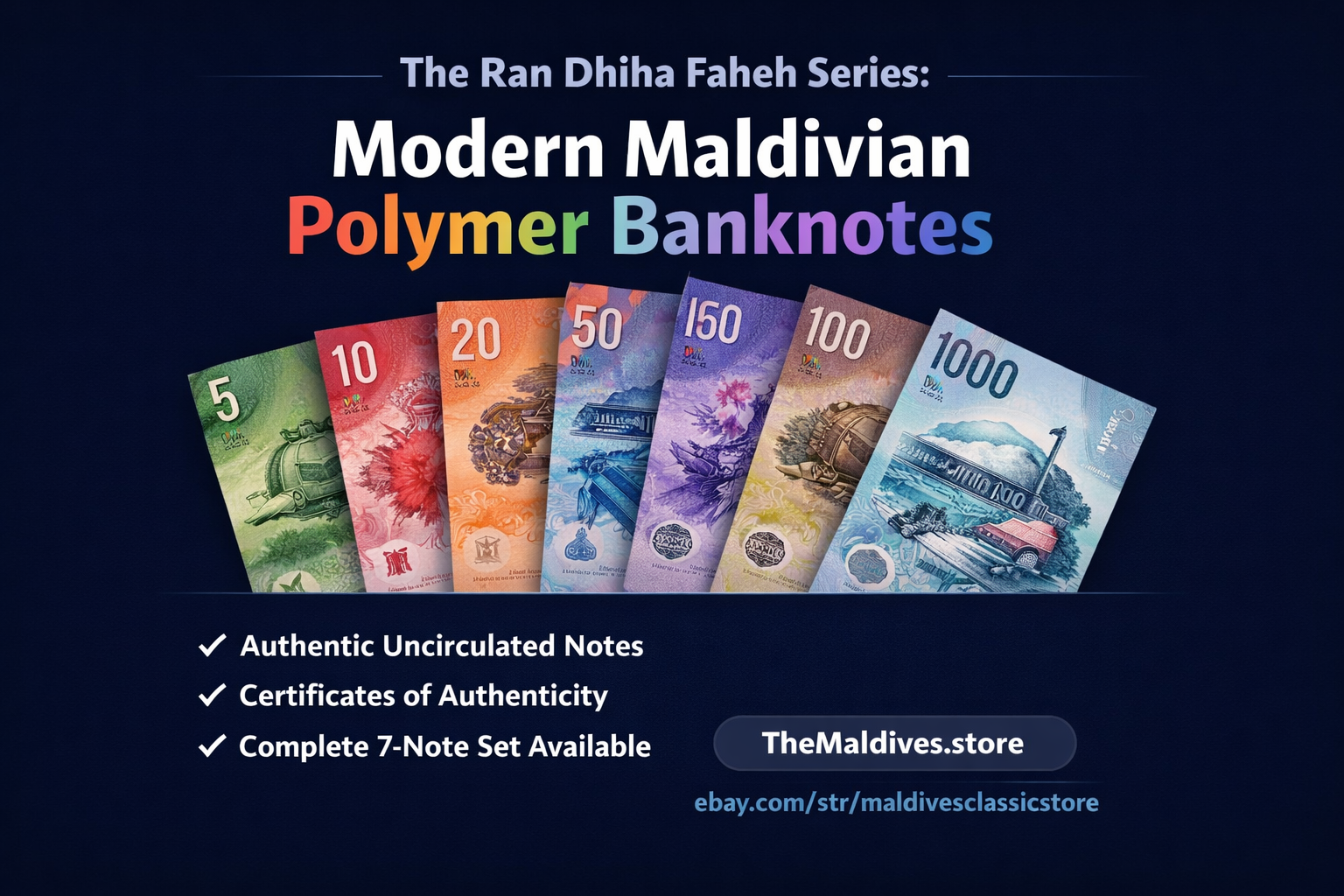
For numismatic collectors and currency enthusiasts worldwide, the allure of collecting banknotes extends beyond their monetary value. It’s about history, art, and the unique story each note tells about its nation. Among the most sought-after modern issues are the Ran Dhiha Faheh polymer series from the Maldives. These vibrant and technologically advanced banknotes represent a significant leap forward in Maldivian currency design and security. Launched between 2015 and 2017, this series beautifully encapsulates the rich heritage and aspirations of this island nation.
The Maldivian Rufiyaa (MVR) notes from the Ran Dhiha Faheh series are not just legal tender; they are exquisite pieces of art and engineering. Made from polymer, they offer enhanced durability and a host of innovative security features, making them a fascinating addition to any collection. For those looking to acquire authentic, uncirculated MVR notes, understanding the background and characteristics of this modern Maldivian banknote collection is crucial. Join us as we delve into what makes the Ran Dhiha Faheh series an indispensable part of contemporary numismatics.
Introducing the Iconic 'Ran Dhiha Faheh' Series
The 'Ran Dhiha Faheh' series, meaning "Golden Fifty" in Dhivehi, was introduced to commemorate 50 years of Maldivian independence in 2015. While initially a special 5,000 Rufiyaa note was issued for the anniversary, the broader series launched with new 10, 20, 50, and 100 Rufiyaa notes in 2016, followed by the 5, 500, and 1000 Rufiyaa notes in 2017. This marked a monumental shift from paper to polymer, bringing the Maldives into the forefront of modern banknote technology. Each denomination showcases unique aspects of Maldivian life, culture, and nature, from traditional fishing boats (dhonis) to local flora and fauna.
The transition to polymer was driven by the need for more durable and secure currency, better suited to the tropical climate of the Maldives and resistant to the wear and tear of daily use. Polymer notes last significantly longer than their paper counterparts, reducing replacement costs and environmental impact. The adoption of this advanced material also allowed for the integration of state-of-the-art security features that are difficult to counterfeit, ensuring the integrity of the nation's currency. This series has quickly become a cornerstone for anyone building a comprehensive Maldives banknote collection.
Historical Context and Design Evolution
Before the Ran Dhiha Faheh polymer series, Maldivian currency primarily consisted of paper banknotes that, while beautiful, were susceptible to damage from moisture and frequent handling. The move to polymer represents a commitment by the Maldives Monetary Authority (MMA) to modernize its monetary system and protect its economy. The designs of the Ran Dhiha Faheh series meticulously preserve traditional Maldivian artistic elements while embracing a contemporary aesthetic.
Artists and designers worked to ensure that each note tells a visual story, depicting historical events, traditional crafts, and the Maldives' stunning natural environment. For instance, the 5 Rufiyaa note features a local football game, symbolizing community and passion, while the 100 Rufiyaa note proudly displays traditional Maldivian women dressed in their national costume. This careful attention to detail ensures that the notes are not just transactional tools but cultural ambassadors.
Advanced Features of Maldivian Polymer Banknotes
The polymer banknotes Maldives has introduced with the Ran Dhiha Faheh series are renowned for their cutting-edge features. Unlike traditional paper notes, polymer provides a superior substrate for incorporating complex security elements. These features make the notes incredibly difficult to counterfeit while also ensuring their longevity, even in challenging environmental conditions. Understanding these advancements is key for collectors and anyone appreciating modern currency design.
The durability of MVR polymer notes is a major advantage. They are waterproof, tear-resistant, and more resistant to dirt and grime, meaning they can withstand constant circulation much better than paper notes. This resilience ensures that even notes that have been in active use retain much of their aesthetic appeal. For collectors seeking uncirculated MVR, this means the pristine condition is more readily preserved. To learn more about the technical aspects, explore our detailed article on Unveiling the Durability & Security of Maldivian Polymer Banknotes.
Security Elements You Can See and Feel
Each denomination in the Ran Dhiha Faheh series incorporates a range of overt and covert security features. These include:
- Transparent Windows: Polymer allows for clear windows that often contain sophisticated optical devices, such as diffraction gratings or reflective patterns, that change appearance when tilted.
- Tactile Features: Raised ink areas, detectable by touch, are incorporated to assist visually impaired individuals and act as a security feature.
- Color-Shifting Ink: Certain elements on the notes are printed with ink that changes color when the note is tilted, providing an easy way to verify authenticity.
- Microtext: Extremely tiny text, often visible only under magnification, is intricately woven into the design.
- Latent Images: Images or patterns that become visible only when the banknote is viewed at a specific angle.
- UV Features: Under ultraviolet light, specific elements on the notes glow in various colors, adding another layer of security.
These features are strategically placed to deter counterfeiting and provide clear indicators of authenticity for the public and financial institutions. The combination of these technologies makes the Ran Dhiha Faheh polymer series a benchmark in modern banknote security.
Environmental and Practical Advantages
Beyond security and durability, polymer notes offer environmental benefits. Their longer lifespan means fewer notes need to be produced, reducing the carbon footprint associated with manufacturing and distribution. When they eventually reach the end of their life cycle, polymer notes can often be recycled, contributing to a more sustainable currency system.
Practically, for a nation like the Maldives, surrounded by water and with a humid climate, polymer notes significantly reduce the damage caused by moisture and wear. This not only saves costs for the central bank but also ensures that the currency remains in good condition for longer, facilitating smoother transactions for residents and tourists alike.
The Artistry and Cultural Narratives within Ran Dhiha Faheh Designs
The visual appeal of the Ran Dhiha Faheh polymer series goes far beyond its modern material. Each banknote is a canvas for Maldivian art, history, and natural beauty. The meticulous design work imbues every denomination with a story, reflecting the nation's identity and heritage. Collectors often seek out these notes not just for their numismatic value, but for the intricate details and cultural narratives they convey.
The notes celebrate the unique Maldivian lifestyle, which is deeply intertwined with the ocean and its rich cultural traditions. For example, the 50 Rufiyaa note depicts traditional Maldivian boat building, highlighting the importance of 'dhonis' in the nation's economy and transport. The higher denominations, such as the 1000 Rufiyaa note, showcase the majestic whale shark, symbolizing the Maldives' pristine marine environment and its commitment to conservation. This level of artistic detail positions these polymer notes as true collectibles. To appreciate how this contemporary artistry contrasts with past designs, one might explore The Artistry & Heritage of Classical Maldivian Paper Banknotes.
A Closer Look at Denomination Designs
- 5 Rufiyaa: Features a local football game and the banyan tree, representing community spirit and nature's resilience. (Initially issued in paper, polymer version introduced later)
- 10 Rufiyaa: Depicts traditional drummers (boduberu), celebrating Maldivian music and festive culture, alongside the beautiful reef manta ray.
- 20 Rufiyaa: Showcases traditional fishing, a cornerstone of the Maldivian economy, and the unique Maldivian flying fox.
- 50 Rufiyaa: Illustrates traditional boat building (dhoni construction), a vital skill passed down through generations, with the green sea turtle.
- 100 Rufiyaa: Features a group of Maldivian women dressed in traditional attire, symbolizing national identity and the rich textile heritage, alongside the black-bellied coral snake.
- 500 Rufiyaa: Captures the artistry of coconut palm harvesting, a historical economic activity, with the elegant tropical leaf, Fungi Fandana.
- 1000 Rufiyaa: Displays the majestic whale shark, emphasizing the Maldives' stunning marine biodiversity and its global appeal as an eco-tourism destination.
These designs are not merely decorative; they serve as a visual encyclopedia of Maldivian life, making each note a miniature museum piece.
Collect the Complete Modern Maldivian Set
For collectors, acquiring a complete set of the Ran Dhiha Faheh polymer series is a highly rewarding endeavor. The series offers seven distinct denominations, each telling a part of the Maldivian story. Whether you are a seasoned numismatist or a newcomer to currency collecting, these notes provide a unique blend of modern technology, cultural richness, and investment potential. Collecting the entire set allows you to appreciate the full spectrum of the Maldivian visual narrative in its most durable and secure form.
The demand for uncirculated MVR notes from this series is consistently high, particularly for the higher denominations and complete sets. Collectors prefer uncirculated notes because they retain their crispness, vibrant colors, and all original security features, just as they were issued by the Maldives Monetary Authority. These pristine conditions ensure maximum aesthetic appeal and long-term value retention.
Why Invest in Uncirculated Maldivian Polymer Notes?
- Preservation of Artistry: Uncirculated notes showcase the intricate designs and vibrant colors in their original glory, free from the wear and tear of circulation.
- Higher Collectible Value: Generally, uncirculated notes command a higher premium than circulated ones, making them a better investment for serious collectors.
- Durability of Polymer: The polymer substrate ensures that these notes, even when handled, are far more resistant to damage than paper notes, preserving their pristine condition for longer.
- Historical Significance: As a complete transition to polymer currency, the Ran Dhiha Faheh series marks a significant moment in Maldivian monetary history, making early issues particularly valuable.
At TheMaldives.store, we specialize in providing authentic, uncirculated Maldivian currency notes, including all denominations from the Ran Dhiha Faheh series. Each note comes with a certificate of authenticity, guaranteeing its origin and condition. Build your Maldives banknote collection today and own a piece of this vibrant island nation's monetary heritage. You can explore our full product catalog to find individual notes or complete sets ready for your collection. View all Maldivian Currency Notes.
Building Your Collection
Starting or expanding your collection of Ran Dhiha Faheh notes is straightforward. Consider beginning with a complete set to ensure you have all denominations. Then, you can focus on specific notes that resonate with your interests or fill gaps in your existing collection. Always prioritize notes in uncirculated condition from reputable sources to ensure authenticity and value. The Ran Dhiha Faheh polymer series offers a compelling entry point into the world of modern currency collecting, combining beauty, innovation, and cultural depth.
Frequently Asked Questions about Ran Dhiha Faheh Polymer Banknotes
What is the Ran Dhiha Faheh series?
The Ran Dhiha Faheh series is the modern set of Maldivian currency notes, primarily made from polymer. It was introduced between 2015 and 2017 to commemorate 50 years of Maldivian independence, featuring seven denominations (5, 10, 20, 50, 100, 500, 1000 MVR) with enhanced durability and security features.
Why did the Maldives switch to polymer banknotes?
The Maldives switched to polymer for several key reasons: increased durability against the tropical climate and general wear, enhanced security features to combat counterfeiting, and a longer lifespan that reduces production costs and environmental impact compared to traditional paper notes.
What denominations are included in the Ran Dhiha Faheh polymer series?
The series includes seven denominations: 5 Maldivian Rufiyaa (MVR), 10 MVR, 20 MVR, 50 MVR, 100 MVR, 500 MVR, and 1000 MVR. Each note features unique designs reflecting Maldivian culture, history, and nature.
How can I verify the authenticity of a Ran Dhiha Faheh banknote?
Authentic Ran Dhiha Faheh notes feature advanced security elements such as transparent windows, raised tactile printing, color-shifting ink, microtext, latent images, and UV features that glow under ultraviolet light. Always inspect these features carefully or purchase from trusted numismatic dealers.
Where can I buy uncirculated Ran Dhiha Faheh notes for my collection?
You can acquire authentic, uncirculated Ran Dhiha Faheh notes, including individual denominations and complete sets, from specialized e-commerce stores like TheMaldives.store. We provide certificates of authenticity for all our Maldivian currency offerings.
Conclusion
The Ran Dhiha Faheh polymer series stands as a testament to the Maldives' commitment to modernism, while deeply honoring its rich cultural heritage. These banknotes are much more than mere transactional tools; they are miniature works of art, embedded with advanced security features and crafted from durable polymer. They tell the story of an island nation, from its traditions and vibrant marine life to its journey of independence and progress. For numismatic collectors, they represent a unique opportunity to own a piece of modern monetary history, distinct in both material and design.
Collecting the complete Maldives banknote collection from the Ran Dhiha Faheh series, especially in uncirculated condition, is a truly rewarding pursuit. It allows for an appreciation of their intricate details, the resilience of polymer, and the cultural narratives they embody. As an investment, these notes offer not just monetary value but also a tangible connection to the Maldivian identity. Explore the full range of these magnificent notes and begin or expand your collection today. Visit TheMaldives.store to discover authentic, uncirculated Maldivian Rufiyaa notes that are ready to become the next treasured additions to your numismatic portfolio.